Anyone Can Sing
Episode #101
5/1/2026 | 43m 33sVideo has Closed Captions
Voice coaches set out on a journey of vocal transformation.
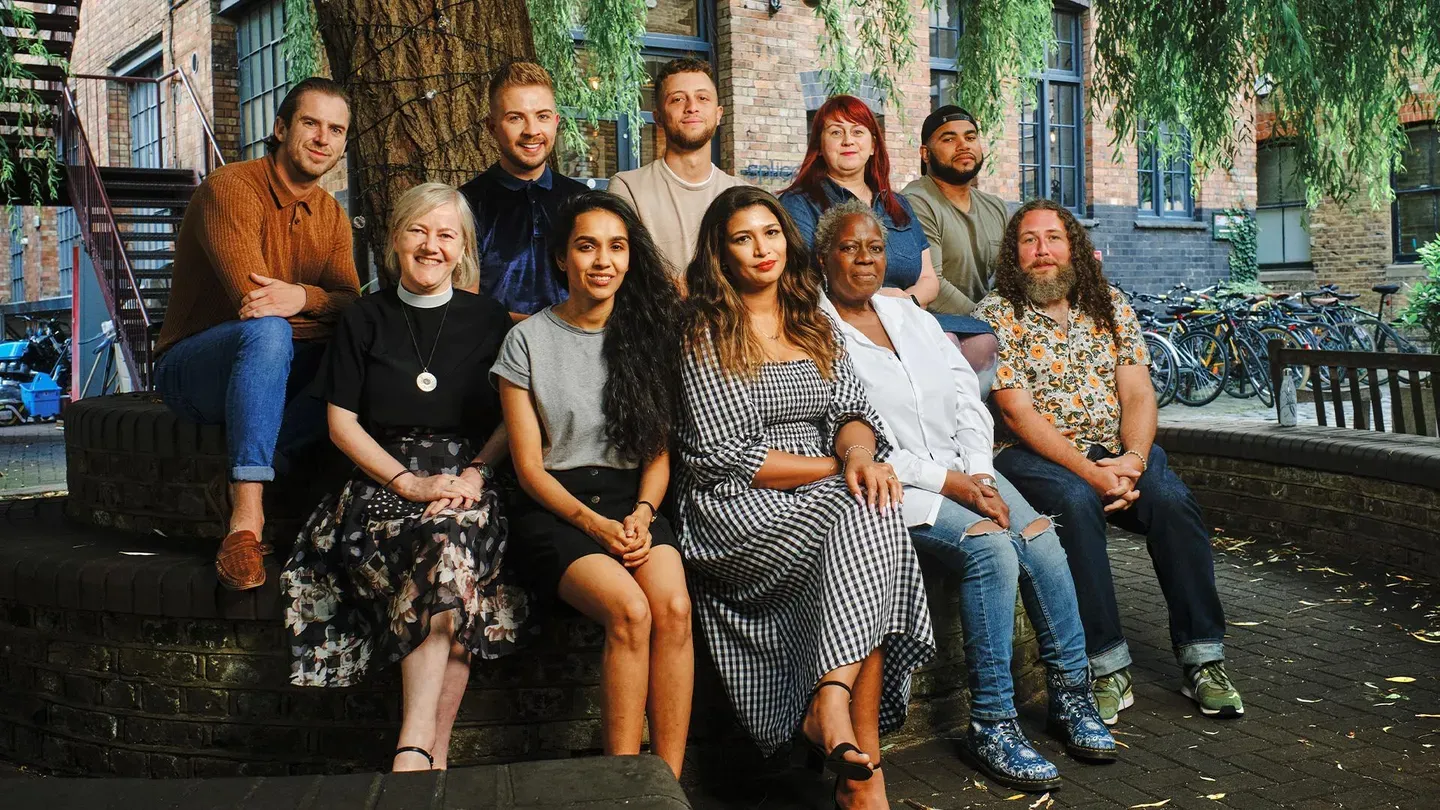
Faced with participants who simply cannot sing, the ENO's world-class voice coaches set out on a journey of vocal transformation and narrow the group down to six.
Problems playing video? | Closed Captioning Feedback
Problems playing video? | Closed Captioning Feedback
Anyone Can Sing is presented by your local public television station.
Distributed nationally by American Public Television
Anyone Can Sing
Episode #101
5/1/2026 | 43m 33sVideo has Closed Captions
Faced with participants who simply cannot sing, the ENO's world-class voice coaches set out on a journey of vocal transformation and narrow the group down to six.
Problems playing video? | Closed Captioning Feedback
Where to Watch Anyone Can Sing
Anyone Can Sing is available to stream on pbs.org and the PBS app.
Providing Support for PBS.org
Learn Moreabout PBS online sponsorship-Singing moves us, entertains, and uplifts us.
Now science tells us that singing is even more powerful, helping improve both mental and physical health, and promoting the life-enhancing benefits of singing is the English National Opera.
During the pandemic, the ENO team worked with long-COVID sufferers, teaching them to sing and improving their well-being.
Now they want to show that the benefits of singing are for all of us.
[ Singers vocalizing ] And that anyone can sing.
♪♪ ♪♪ The ENO is launching a project to give six non-singers the skills and confidence to perform for an audience in just three months.
-Can't believe I'm doing this.
Okay.
[ All singing ] -They called upon the nation's vocally challenged to apply for this life-changing experience.
-[ Singing off-key ] -♪ If you need a little money, it's a rich man's world ♪ -I know I've gone badly out of tune here.
-[ Singing off-key ] -♪ With suspicious minds ♪ -The 600-plus applicants were whittled down to just 10 based on their musical potential.
-I get all the right notes, just not in the right order.
-Now it's the task of three world-class voice coaches to decide the six who will benefit the most from this operatic experience.
Award-winning tenor Nicky Spence.
-It's an unbelievable combination of different skills to be an opera singer.
You're part actor, singer, athlete.
And of course your personality is there as well.
But I think people don't realize what a collaborative sport opera singing is, and that's what makes it so bloomin' difficult.
-Professor of singing and renowned mezzo soprano Sarah Pring.
-I have been teaching people to sing for over 20 years.
For me personally, the whole thing is based on how you communicate the passion that you have.
-Former countertenor and acclaimed vocal tutor Michael Harper.
-I like beautiful voices and beautiful doesn't always mean lyrical and silky and smooth.
I think the voice is a manifestation of the personality.
And yes, anyone can sing.
♪♪ -The 10 singers have come to London to have their voices assessed.
They'll be put through their paces with a series of exercises to test their musicality and vocal range.
But that's not all the experts will be looking for.
-Well, you need commitment and determination to be an opera singer.
But that hidden ingredient in the special sauce of talent, who knows what that is?
But we know it when we see it.
We know it when we hear it.
So when we listen to these singers, I will be looking for that special charisma.
-The first singer is highway maintenance worker Darrias.
-Anybody who I sing in front of will tell me how terrible I am at singing.
[Indistinct] Try and tell me to stop.
-Hi.
-Hello.
-Hi.
Welcome, welcome.
Come in.
So, what have you prepared for us to sing today?
-"A Team" by Ed Sheeran.
-Alright, let's hear you.
-Right.
I've been practicing for days, and I feel like I've just forgot all the words, so... ♪ And they say she's in the Class A team ♪ ♪ Stuck in her daydreams ♪ ♪ It's too cold outside for angels to fly ♪ -Hey!
Well done, well done.
-Well done.
-Okay.
Excellent, excellent.
So we're gonna just try a few exercises with you just to see what you can do.
Okay?
So Murray's going to play a note for you, and then you're going to sing the note back.
So, Murray.
[ Note plays ] -♪ Duh ♪ -Good.
So, matching pitch means someone plays a note, you listen to the note, and then you sing it back.
And that's just to see what your level of musicality is.
♪ La ♪ -♪ Duh ♪ -Yeah.
Almost.
You were closer the first time.
Now, we might even take somebody who doesn't match pitch to see what kind of journey they'll go on because I think it's possible to go from not being able to match pitch to singing a song.
[ Note plays ] -♪ La ♪ -Okay.
♪ La ♪ -♪ La ♪ -Closer, closer.
Thank you very much for coming.
-Thank you.
♪♪ -Take a spot in the sacred space of singing.
And I believe that's quite appropriate, as I can see you are a lady of the cloth.
-I am a lady of the cloth.
Yes.
-Thank goodness.
We need some divine intervention.
-Yeah.
Me too.
-At this stage.
So tell us a bit about you.
-My name's Ellen Clark-King.
I live in London.
I'm currently the dean of King's College London.
-Why would you like to sing?
Do you feel as if your clergy toolbox is lacking?
-There are services where it would really be good to be able to sing and lead and sing with the choir.
-Now, this game we're going to play, it's a lovely arpeggio sequence.
-I am on top of the world is ♪ I am on top of the world ♪ singing an arpeggio, so that means you're singing the notes of a chord, and a chord is just notes to play together.
And we wanted to check their range.
How far can they sing low?
How high they can sing?
-♪ I am on top of the world ♪ -♪ I am on top of the world ♪ -How did that feel?
-It felt like I was singing a different tune from the one I was hearing.
-Will you for me very quickly go ♪ Bah bah bah bah bah bah bah bah bah bah bah bah ♪ ♪ Bah bah bah bah bah bah bah bah ♪ -♪ Bah bah bah bah bah bah bah bah bah bah bah bah ♪ ♪ Bah bah bah bah bah bah bah bah ♪ -Excellent.
So when you do it quickly, you stay to the pitch.
-Yeah.
-But when we have time to overthink, we go off the path.
Is this reminding us of faith at all?
-There is a certain amount of faith, yes.
-Excellent.
So let's have faith that this is going to happen.
-♪ I am on top of the world ♪ -Bravo!
-Well done.
-It must be about 30 years at least since I sang intentionally in front of other people.
There have been moments when my mike was on when it shouldn't be at church, which was very embarrassing, but... But it felt so much better than it did the last time I did it.
So much better.
♪♪ -I'm Jamie, I'm 38, and I'm from Liverpool.
So, as a dancer on cruise ships, I have performed in opera shows.
But the idea of me singing opera is totally different ballgame for me.
-Go for it.
-♪ Help me escape this feeling of insecurity ♪ ♪ Aha ♪ ♪ I need you so much, but I don't think you really need me ♪ ♪ Ah, yeah ♪ ♪ Relight my fire ♪ ♪ Your love is my only desire ♪ ♪ Relight my fire ♪ ♪ 'Cause I need your love ♪ -Yeah!
-Yes!
-The final exercise that we're doing is singing a line from "O mio babbino caro."
[ Notes playing ] But we use the words "O my beloved father," which is a translation into English.
And because we're at the English National Opera, it's important that we sing the opera in English.
-♪ O my beloved ♪ -♪ Love ♪ And what we were checking with that was if someone could hear a tune and then sing the tune back to us.
Because opera is all about tunes.
-♪ O my beloved father ♪ -Excellent.
-Thank you very much.
Thank you.
-A little bit stressed.
I couldn't get the top note.
I could hear where the note was, and I could hear when I was off.
I don't know how they do it.
-[ Whistles ] -Ooh, balls.
-So, Luke, tell us why you're here today.
-So I really want to learn to s-s-s-s-sing.
Because -- ooh!
-- when I s-sing -- oh-ooh!
-- I don't tick or st-st-stammer or -- [ Whistles ] And I really want to give my fiancée a p-performance -- oh!
-- at our w-w-wedding.
-Oh, wonderful.
How wonderful.
-Oh, wow!
-Wonderful.
This tick you talk about and the stammering, tell us about that.
-So I have T-T-T-Tourette's syndrome.
Oh!
Didn't start for me until I was 25.
It turned my life upside d-d-down for a long t-t-t-time, and over the last sort of 18 m-m-months, I've been rebuilding everything -- oh!
Hence doing something like th-th-th-this.
-So whenever you're ready, go for it.
-Oh!
[ Whistles ] [ Exhales deeply, whistles ] ♪ Starry, starry night ♪ ♪ Paint your palette blue and gray ♪ ♪ Look out on a summer's day ♪ ♪ With eyes that know the darkness in my soul ♪ [ Whistles ] ♪ Now I understand what you tried to say to me ♪ ♪ And how you suffered for your sanity ♪ [ Whistles ] ♪ And how you tried to set them free ♪ ♪ They would not listen ♪ ♪ They did not know how ♪ ♪ Perhaps they'll listen now ♪ [ Whistles ] -Oh, God.
-That was really moving.
-I'm a mess.
-Such a beautiful song.
-Oh, thank you very m-m-m-much.
Thank you.
-Bye.
Lovely to see you.
-See you.
-That was absolutely incre-credible.
Like, I've never done anything like that before.
I'm so sorry.
[ Sniffles ] I kind of -- I needed that.
Every time people meet me, meet me, it's -- [ Whistles ] The tics are the only thing they s-see.
I know it sounds cheesy, but I genuinely feel like someone's seen me.
♪♪ ♪♪ -In an East London studio, the English National Opera has asked renowned voice coaches Nicky Spence, Sarah Pring, and Michael Harper to assess the voices of 10 struggling singers using a series of tasks.
-♪ La ♪ -♪ La ♪ -♪ La ♪ -Excellent.
Do you want to try that again?
-They're doing something probably they've never done before -- scales, arpeggios.
You know, they might think it's some kind of Italian dish.
Actually, it's a way of singing.
So introducing that to them and seeing how they respond, you gauge the kind of person that you want to work with.
-Oh, s-s-sorry.
Oh!
-The coaches will only pick the six who they believe have the passion and potential to learn the techniques needed to sing opera.
And in just three short months.
-It's a huge challenge.
Physically, mentally, emotionally probably most of all because you are asking people to express on the outside emotions that they may be feeling, but have never put forward into a public place.
♪♪ -Hi.
-Welcome to "Anyone can Sing," and they can, I promise you.
Could you just tell us who you are and where you come from?
-I'm Rico.
I'm from London.
-And what do you do?
-Electrician.
-Electrician?
Oh, good.
Can I book you afterwards?
[ Laughter ] What have you brought to sing?
-Enrique Iglesias, "Hero."
-When you feel ready, you give us a rendition.
-Ah.
♪ I can be your hero, baby ♪ ♪ I can kiss away the pain ♪ ♪ I will be right there for you ♪ ♪ You can take my breath away ♪ -Well done, well done.
[ Coaches clapping ] -Sorry.
-Now, we've got a few exercises.
We have an arpeggio of seven notes, and the words to that are "I am on top of the world."
[ Notes playing ] Want to have a go?
-♪ I am on top of the world ♪ -Fantastic.
Murray.
-Well, in opera we have little boxes generally of where people's voices lie.
So if you're a basso profondo, then you're, you know, singing, making things shake.
And if you're, uh, a coloratura soprano, you're singing notes that only dogs can hear.
So that checking where their ranges are is really important.
-♪ I am on top of the world ♪ -I want you to do that again and I want you to sing it with gusto.
-♪ I am on top of the world ♪ -Blimey, blimey, blimey!
Well done, you.
Thank you so much for coming to sing.
-Forgot my words for a bit, but they showed me my range ability.
I actually want to practice it myself.
♪♪ -The sixth singer, Beverley, is 52 and runs a pub with her husband.
-♪ Sometimes it's hard to be a woman ♪ ♪ Giving your love to just one man ♪ ♪ But if you love him, you'll forgive him ♪ ♪ Even though he's hard to understand ♪ ♪ Stand by your man ♪ ♪ Give him two arms to cling to ♪ ♪ Keep giving all the love you can ♪ ♪ Stand by your man ♪ -At points, you look like you were having a procedure done.
[ Laughter ] -Well, it's the first time I've sung it sober.
[ Laughter ] ♪♪ -Hi.
-Welcome.
So you've brought something to sing for us today.
And what might that be?
-It's going to be "Take a Bow," Rihanna.
-Okay.
Excellent, excellent.
-Fantastic.
-I love Rihanna.
-So go for it then.
-Okay.
♪ You look so dumb right now ♪ ♪ Standing outside my house, trying to apologize ♪ ♪ You're so ugly when you cry ♪ ♪ And don't tell me you're sorry 'cause you're not ♪ ♪ Baby, when I know you're only sorry you got caught ♪ ♪ That was quite a sh-- ♪ Sorry.
Sorry.
I'm so nervous.
-Don't say sorry.
-No apologies.
-Now we're going to do a few exercises with you.
-Okay.
-Murray.
[ Note plays ] -♪ La ♪ -Excellent.
Do you want to do it again?
Just let your hands relax to your side.
[ Note plays ] -♪ La ♪ -Yay!
-Excellent, excellent.
Murray.
[ Note plays ] -♪ La ♪ -Try that again.
Listen to him.
[ Note plays ] -♪ La ♪ -Much better.
Much, much better.
So thank you very much, Khadijah.
♪♪ -Why do you think you can't sing?
-I've listened to myself.
-Do you relate to music?
-I play guitar and I'm kind of a deejay on a radio show up in Manchester.
-Ah!
-Music is a huge part of me.
-Fantastic, fantastic.
-So we're going to do a couple of exercises to work out whether you're a Mariah Carey or a Barry White.
Okay?
-♪ I am on top of the world ♪ -Clever you.
One note just slightly off.
Very good.
We're going up a bit.
-♪ I am on top of the world ♪ -We're going to go up further.
Drop your arms out.
Ah!
-♪ Ahh ♪ -♪ I am on top of the world ♪ -You've managed to go through Nicky's range, Michael's range, my range.
And you're still singing.
Well done, you.
[ Coaches clapping ] ♪♪ -The penultimate performer is 34-year-old tutor Anjuli.
-Tell me a little bit about your journey to discovering that you can't sing.
-When I was little, I used to think I was okay.
But then as I grew up, people just kept telling me how awful I sound.
-Oh, no.
Well, we're going to just see where your voice sits.
[ Note plays ] -♪ La ♪ -Now with a bit more conviction.
[ Note plays ] -♪ La ♪ -Excellent.
So that went to the end of the rug.
-Okay.
-Just so you know.
So this time, we want it here.
-Okay.
-Go for it again.
[ Note plays ] ♪ La ♪ -Bravo.
-♪ I am ♪ -That's okay.
-♪ I am ♪ -Don't worry.
Don't worry.
Go for it.
-I forgot the words.
-I am on top of the world.
-Okay.
♪ I am on top of the world ♪ -♪ And another ♪ -♪ And another ♪ I'm sorry.
-You're almost there.
You're almost there.
-We'll see you later on.
-That was very moving.
Thank you.
♪♪ -The final voice the coaches will assess is that of 65-year-old Shirley.
-And I suppose what really we're interested in is why you think you can't sing.
-My daughter from very young has forbidden me from singing because in my ears it sounds... -Marvelous?
-Marvelous.
I sound like Tina Turner, and it's so disappointing when she kind of, like, gives me the look and it's like, no.
-So, Murray is going to play a note on the keyboard for you to try and sing back as close to that note as you can get.
Murray.
[ Note plays ] -♪ La ♪ And that's the note.
-Was it?
[ Laughs ] -Could we go a bit higher up the scale?
[ Note plays ] -♪ Laaa ♪ -Now, you've got a bit excited in that one.
♪ La ♪ -♪ La ♪ No.
That's wrong.
-♪ La ♪ -♪ La ♪ -Yeah.
You just need to give your ear a bit more time.
A voice that somebody may say is terrible could be that, uh, that there are issues with physicality.
There are issues with the ear.
So first of all, my job is to find what the issues are and then to really try and help the student as much as possible.
I'm going to sing it to you once.
♪ I am on top of the world ♪ Sing it with you and... -♪ I am on top of the world ♪ -♪ I am on top of ♪ Yay!
You've got it!
You've got it!
All you need is confidence.
-Love it!
Oh, my God!
♪♪ -What you're looking for are people that you think are going to be able to take on three months of information.
I thought he had lots of potential.
Not really aware yet of what his voice is doing.
And there will be emotional challenges, physical challenges and mental challenges.
And it's to see who of the 10 are most able to do that.
-I think she has possibility.
She just lacks confidence.
-At the moment, she's scared of her own voice.
I don't really care what they sound like.
For now.
Wait until I get my hands on them and then we'll look for a finesse and Maria Callas, possibly.
But until then, I just want storytelling.
-There was a quality there that, you know, you could hear singing a rock song or something like that.
-Yes, yes.
-But this is opera.
Because we're choosing a group of people, we want to have a real mix of potential and a real mix of quality, but someone who has a journey to go on.
-We're old and ugly enough to know quite a lot, but I feel like I could learn something from teaching a man like that.
But the fact that these guys have come here and been so brave to show us something which is entirely out of their comfort zone, I hate the fact that we have to send any home.
♪♪ -I think anybody can learn to sing.
If you can speak, you can sing.
It's two vocal folds.
You just got to change your pitch.
We're going to pimp up your speaking.
And that is day 1.
-The English National Opera is convinced that anyone can sing.
Having assessed the voices of 10 wannabe singers, expert coaches have chosen these six to take up the challenge.
-Why we chose this glorious gang was because of the way that they perceived their singing.
Often if you can't sing, you think it's because "I've been told I can't sing," "I've got a terrible voice."
But actually, with just turning that narrative on its head, I think we could change their perception of their singing, which is the most important thing.
-The singers are arriving at the Coliseum for the first day of their intensive voice training.
-Good morning, everyone.
Welcome.
Come in, come in, come in.
-And they have just 12 weeks to start learning a skill that takes years to master.
-How are you feeling this morning?
Good.
Ready for the work today?
Because we're going to start finding out who you are and hearing your voices.
It takes more time to train for singing as an opera singer than it does to learn how to be a doctor.
I think they may not understand how much work they're actually going to have to do to get to where they want to be, or where we want them to be by the end of this.
So welcome to the London Coliseum, home of the English National Opera.
How many of you have been here before?
-Never.
-Never?
Okay.
So here's your first time.
I'm really looking forward to having you here today.
So, do you want to follow me through?
Here we go.
♪♪ -Renowned vocal tutors Nicky Spence... -Hey!
Chrissy, baby.
-[ Laughs ] -...Sarah Pring... -Hello.
Hello.
-...and Michael Harper... -So lovely to see you.
-Nice to see you.
-Come in, come in.
-...have taken on the daunting task of voice coaching two singers each, with bespoke weekly lessons and challenges along the way that will test both their voices and their resolve.
-Now, the thing is, sweetheart, it's about everybody's breathing.
-39-year-old electrician Rico will be working with mezzo soprano and singing professor Sarah.
-I think I want to achieve confidence.
Confidence to sing in front of people, to be honest, and just not feel shy.
Because I'm normally a shy person.
-Now, so what you do -- You breathe straight into your shoulders.
This is clavicular breathing.
In other words, high breathing.
Breathing is going to be the most fundamental thing for each of these singers because without that, we won't really know what their voice type is because the breath won't be there enough for us to extend up and down the ranges.
So it is absolutely vital.
I'm going to tie this.
Excuse me.
Now, can you feel that?
-Yes, I can.
-Take a deep breath just where that scarf is.
Breathe out an "S."
-[ Exhaling slowly ] -Two, three, four, five.
Excuse me.
I'm going to prod you.
Six.
Seven, eight, nine.
Relax that.
Let it go.
My God, your arms are like this.
If you do it to me -- Knock my arm.
-Oh, yeah.
Okay.
-Do you understand?
Not like -- Oh!
-Okay.
Dead arm, dead leg.
-Oh, is that what you would call it?
-Dead arm, yeah.
-We call it relaxed.
-Okay.
[ Laughs ] -♪ Saaa ♪ [ Notes play ] -♪ Saaaaaa ♪ [ Note plays ] ♪ Saaa ♪ -So, what you're doing is you're not using your tongue.
-♪ Sssaaa ♪ -♪ Saaa ♪ -So can you roll your "R"?
[ Trills tongue ] -No.
-Lazy tongue.
[ Trills tongue ] -[ Grunting ] -Have you never been able to roll your "R"?
-Never tried.
-Can you flap on a "L"?
[ Trills tongue ] ♪ La-la-la-la-la ♪ -♪ La-la-la-la-la ♪ ♪ La la la la ♪ -I couldn't understand why I couldn't hear your consonants.
Now I can because what you have is an issue -- at the moment -- People can learn to roll their tongues.
There's no "You can't roll your 'R.'"
Do you understand?
Well, I think we're going to -- We've got a bit of a journey to go, haven't we?
One of the interesting things that presented itself during Rico's first session was that he appeared not to have strong consonants.
He appeared not to be able to move his tongue.
I've got to release the tongue as well as the jaw as well as the breath.
So it's very clear that there are those technical issues we need to deal with.
♪♪ -Hey.
-Hello!
-Award-winning tenor Nicky will play voice coach and mentor to priest and university dean Ellen.
-I think Ellen is so interesting because she wants to be able to sing so she can feel the conviction from her parishioners.
She feels as if she's letting them down.
So even if we can begin the love affair with herself of her voice, then we've done the job.
What happens when you try to sing?
-If I'm with somebody else, even if it's just one other person, I can feel sort of the tension in my chest and my jaw.
I'm never certain what sort of sound is going to come out of my mouth.
-I want you to love your voice however it comes out.
But lesson number one is breathing.
-Okay.
-So let's stand up.
-Okay.
-You might have heard people say sing from your boots.
-Yeah.
-There's a really easy way of finding where this is.
Pop your finger up here and imagine that it's a feather.
And I want you to blow it off.
Where in your body engages when you do that?
-Just down there, actually.
-Absolutely.
I say it's about as low as you can go without getting personal.
-Yeah.
[ Laughs ] -This is your engine room where your breath is going to start and come from your glorious throat.
-Yes.
-I'm going to teach you this little exercise.
[ Notes playing ] On a "va" we're going to go... [ Vocalizing ] -[ Laughs ] [ Vocalizing ] -Cool.
So it's a small jump at the end?
-Yeah.
[ Both vocalizing ] -[ Vocalizing ] It was such fun.
I still don't feel I've quite got it.
And I probably won't for a number of weeks yet, but I loved it.
-So when you're going away from the lesson today, what are your takeaways?
-From here and breathe.
-Excellent.
-They say anyone can sing.
I'm not yet convinced that that's actually the case, but I'm going to love the journey wherever it is that it takes me.
-Lots of love.
See you soon.
-Bye.
Bye.
♪♪ -In another part of the Coliseum, 25-year-old civil servant Khadija is beginning a lesson with opera tutor Michael.
-What is it about singing that really pulls you in?
-I enjoy singing.
I just wish I was actually, you know, good at something, excelling in something, because I feel like I kind of pass through life being average at stuff.
-You said "I'm average," so you have that mentality about yourself to start with.
-Yeah.
-So where do you think that leaves you?
-I don't know.
Quite vulnerable, I guess.
-So where I'm going to start is not with your singing at all.
-Okay.
-So what if we, just to start with, if we opened up here?
-Okay.
-Okay.
We're just going to move them around a bit.
Okay?
So you get a little bit vulnerable there.
-Yeah.
-So we're going to just go the other way and we're going to be really proud.
Khadija is so very nervous.
And I think if we can work away that nervousness and the slight holding in the body, I think we might find a voice in there that she doesn't know is there.
So I want you to just try to do what a baby does when it cries -- it goes "aaaaah!"
-Aaah.
[ Laughs ] -Aaaaah!
[ Both "aahing" ] You have quite wide vowels.
I know I'm going to get so in trouble for this.
Say something for me in Lancashire.
From Bolton, you know.
-Round a roundabout.
-Round a round.
So it's quite in the -- in the back of the tongue is round the roundabout.
-Yeah.
-So we're going to just go round a roundabout.
But I'm just changing the position of how you use your tongue a little bit.
If your tongue is locked up like your head, like your hips, it's all not going to work as efficiently as it could.
So we're going to go back here.
Round the roundabout.
-Round the roundabout.
-Okay.
We're gonna ♪ Round the roundabout ♪ -♪ Round the roundabout ♪ -Well, how was that?
-It felt better.
I felt like more silly, but like I've let myself come out my shell.
-The whole point of the lesson today was to get you unstitched a little bit.
You're sort of held together really tightly with the corset, and we're just loosening it a little bit so you can be a bit freer.
-Yeah.
-I thought the techniques were different.
They were surreal, but it helped me get out of my comfort zone, and I think that's the main focus of it all.
I think between now and the next lesson, I definitely need to try and let loose, um, relax my body and just be more comfortable in myself.
-The next lesson is with Transport for London manager Chris.
-Now, in life -- I don't know about you -- as a bigger chap, I always try and hold my tummy in.
-Always.
-But in opera singing, you've just got to go... [ Exhaling noisily ] Just let it out, baby.
-[ Vocalizing ] -The whole thing should feel connected to down there.
Try again.
To be able to fill a huge auditorium, it is all about release.
You need to let go.
We use our bodies.
We use a particular sequence of muscles which allows us to make enough noise to be heard over a bloody noisy orchestra.
At the moment you're going... [ Vocalizing ] And it sounds like a little bit like you've stepped on a Lego in the night.
-Yeah.
-I want you to think instead of... [ Vocalizing ] Just slightly rounder.
It's going to be terrifyingly difficult.
Some of them may never have engaged with their body at all, or certainly not to the extent which we are going to demand of them.
Now I'm going to play "What a Wonderful World," and I want you to see if you can input some of this new information into the computer.
-♪ I see trees of green ♪ -That's it.
-Go for it.
-♪ Red roses too ♪ -Good.
-♪ I see them blue ♪ -Good.
-♪ For me and you ♪ -Good.
-Oh, my first lesson was fantastic actually.
I don't think I can sing yet, but I think you always walk around feeling "What do I look like from the side or what's going on around there?"
So to actually just go let it all out and actually then the voice goes as well, it's a really nice feeling.
-Brilliant!
Well done, man.
-So, Luke, it's me.
-You accepted the challenge.
-Absolutely.
Why wouldn't I?
-Coach Michael is working with 29-year-old entrepreneur Luke.
-So this is the first time that you've been out on your own in a long time.
How many years has that been?
-F-F-F-Four years.
-Four years?
-Ever since all this started, I don't feel c-c-c-c-comfortable.
Oh!
Being outside on my o-o-own ever.
So I just don't d-d-do it.
[ Whistles ] -I think that working with Luke is going to be an emotional journey for him, as well as a vocal journey, and I think we'll just work on finding that still place more and more often for him.
Finding his stillness and expanding that more and more might actually alleviate some of the... the way he experiences Tourette's.
The purpose of this exercise, Luke, is, one, to get you to be still and calm, but it's also to get you into the lower abdominal muscles which help to support your singing.
I want you to look at me.
Keep your focus on me as much as you can.
Shall we just try a little bit of singing?
You're going to have to stay focused on me.
-Yeah.
-Okay?
And I'll sing it for you.
[ Vocalizing ] And I want you to sing it back.
-[ Vocalizing ] -Good.
Okay.
[ Note plays ] -Oh.
Oh!
[ Whistles ] -You're doing great.
You're doing great.
-♪ I am on top ♪ No.
-Yeah.
So let's stop for a second.
-I don't want how I messed that up.
-Let's stop for a second.
So I want you to try really being still.
That takes a lot of thought and effort for you, doesn't it?
-Yeah.
-Okay.
And just keep focusing on me and just find that calm space.
That's right, just keep letting the breath go in and out.
Keep looking at me.
[ Notes playing ] And you're going to sing.
-[ Whistles ] -[ Vocalizing ] Let the breath come in and go.
-[ Vocalizing ] -Having had that lesson with Luke, I think we've got a big journey to go on.
And how we're going to do that is by doing it stage by stage.
If we can get him to breathe, then I think some of the tics will calm down, because I think the singing will happen if he can breathe and not go off into a tic.
-♪ I am on top of the world ♪ -Excellent.
That was already better, wasn't it?
-[ Whistles ] ♪♪ ♪♪ -Our six aspiring singers are at the London Coliseum, home of the English National Opera, and with just 12 weeks to improve their voices and boost their confidence, a tough first day is drawing to a close.
-I didn't know I had a lazy tongue.
It's the first time I've ever known that.
-Durah!
-Drah!
I felt that Sarah has nailed what my problem is, and she just needs to help me get over that.
-♪ I am on top of the world ♪ -Let's try that again.
Yeah.
So you knew something was dodgy there, didn't you?
-Yeah.
[ Both laugh ] Oh, my homework's relaxing and br-br-br-breathing, so I'm 100% on board with that.
I would have done my homework at school if it was like that.
-Before they head home, the ENO will reveal the final challenge they have to face at the end of their training.
But first, voice coach Sarah Pring has a lesson with Shirley.
-At this early point in time, I don't know exactly what her voice is going to be.
What I feel is that Shirley has this desire, this commitment, this joy that she wants to bring to music.
And that absolutely spoke to me.
Now, what we will all be demanding of our singers, you will have to sing and produce a sound that uses all your body.
And that's one of the things I -- the first things I noticed.
You either lean forward.
You sometimes go to the side.
You sometimes -- I think you're compensating sometimes.
-Yes.
-So open your toes out.
Now you're going to press your hands into your thighs and you're going to stand up.
Your body is in a line.
Don't lift your chin up.
Look straight forward.
I don't need your chin out.
How does it feel?
-So this is how I want to be.
and this is what has gone out of sync, I would say, since last October.
-So you've been doing this, which puts stress on your larynx and your vocal apparatus.
-Right.
-We're not having that.
This is better balanced.
At the moment, you're doing it without your stick.
Singing operatically is a very different experience.
It's a physical commitment.
You use all of your body.
-♪ Laaaa ♪ -♪ Laa ♪ -If I discover during the lessons that there is either a physical injury or a mental trauma or emotional trauma, that could be an inhibitor of the process of learning.
[ Notes playing ] -♪ Saaaaa ♪ -Pull, pull.
♪ Saaaa ♪ -♪ Saaaaaaaa ♪ -Can you hear it?
Yay, yay!
Now, obviously eventually it won't -- you want it to look like that because it look as though I've kicked you.
But eventually that muscle will get used to doing that, which basically it's lifting the air out of the diaphragm so that you're presenting the sound.
Now put your arms up.
♪ Ya ♪ -♪ Yaaaaaaaaa ♪ -Listen to that power!
It's fantastic, isn't it?
Do you feel safe enough to slowly take a couple of steps?
-Yeah.
-Take one step.
I'm with you and come up.
Yeah?
And then come up.
Now turn to me, Shirley.
And you're going to walk with your arms out.
Walk towards me.
Bend those legs.
Yes.
You see?
That feels weird, doesn't it?
Stop.
-But it feels good.
When I began to walk with this old lady's crouch... -Yes.
-...I've lost the ability to walk properly.
-So if I can make you feel a bit better about your body and your balance, I hope that would help you.
-Oh, definitely.
-Thank you so much for your first lesson.
I'm just going to see you off the premises, as they always say.
-Thank you very much.
Thank you so much.
-You're very, very welcome.
I'm crying because she walked out of the lesson with courage and grit and determination and love and passion and all those things.
Oh, my goodness me.
I'm so proud of her.
So proud of her.
She feels old and frail, and I don't want her to feel old and frail.
-I've been really scared for the last 10 months that I was going to lose the ability to walk.
[ Sniffles ] And she's just made me realize that it was something about my balance and my posture, and I needed help to work on that.
I'm not going to become an old lady.
I'm going to be Diva Shirley.
[ Laughs ] ♪♪ -After an emotional first day, there's one last surprise in store.
-So here you are on the stage of the English National Opera.
What do you think?
-It's a bit overw-w-whelming.
-Overwhelming?
[ Laughs ] -I want to perform.
[ Laughter ] -So you may be wondering why we brought you to this glorious space.
In three months' time, for your grand finale challenge, something very exciting will occur.
-Ladies and gentlemen... -[ Whistles ] -...you will be stood on this stage singing to a full 2,500 people.
-No.
No.
-[ Laughs ] -This is what you wanted.
-And you will be the stars of it.
You six will be the stars of it.
-Wow.
-Wow.
-How do you feel?
-It's good.
[ Laughter ] -You just said you want to be on the stage.
Come and stand in the middle and feel what it feels like.
-[ Whistles ] -Just looking out there.
Come on.
You don't see them, though.
[ Rousing music plays ] -So, our aim is to get them to sing a drinking song from "Traviata" and a medley from "The Merry Widow."
And they'll be singing with the chorus of the English National Opera and the orchestra of the English National Opera.
And that's a really big deal.
They're on one of the biggest stages in Europe.
And they're going to have to project their voices into that room with all of these people around them.
That is a big challenge.
-It's amazing and scary and really good to know that we're going to be doing it together.
And just something that I never imagined in my entire life doing.
-I'm actually very excited, to be honest.
I actually want to get going and get on with.
When I was on the stage, I felt like I was at home for real.
-So there's a level of panic right now.
Um, and still, yeah, the shakes still in the knees.
But yeah, let -- let's see how the lessons go.
Let's -- Yeah.
I'll get there.
It'll be fine.
It's going to be fine.
Oh, God.
Yeah.
[ Laughs ] ♪♪ -♪ La ♪ [ Dog barks ] [ Laughter ] -Fabulous.
Look at those hips.
-Swap it.
Swap it.
Swap it.
-This is going to be the opportunity for us all to sing to one another for the first time.
-Oh.
Oh.
I'm quite excited but also bloody nervous, I think.
♪♪ ♪♪ ♪♪ ♪♪














Support for PBS provided by:
Anyone Can Sing is presented by your local public television station.
Distributed nationally by American Public Television